The Hidden Risks of Learning Critical Skills Without Practical Experience
Discover how virtual reality training solutions help employees practise critical skills, improve decision-making, and prepare for real-world workplace challenges
 SheikhAhmed
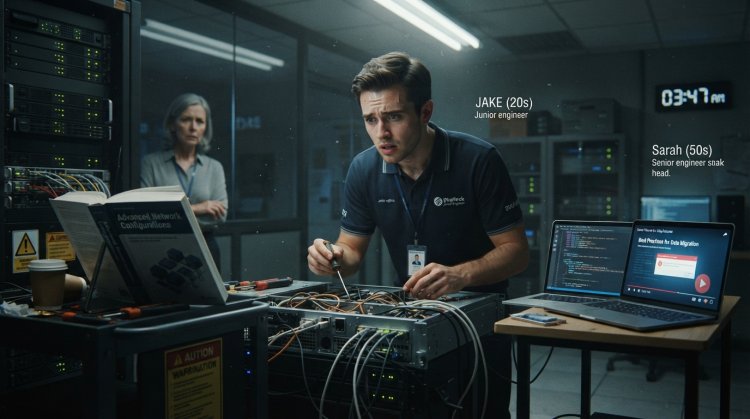
Learning critical skills is essential in industries where safety, accuracy, and quick decision-making matter. From manufacturing and construction to healthcare and industrial operations, employees must understand procedures and know how to apply them in real situations. However, relying entirely on classroom lessons, written instructions, or training videos can leave workers unprepared for unexpected challenges. Without practical experience, even well-informed employees may struggle to respond confidently under pressure. This is why organizations are exploring virtual reality training solutions to bridge the gap between theoretical knowledge and real-world performance.
Why Theoretical Knowledge Is Not Always Enough
Traditional training methods help employees understand concepts, rules, and procedures. However, knowing what to do is not the same as being able to perform a task correctly in a demanding environment.
For example, an employee may understand fire safety instructions but struggle to identify an emergency exit quickly during a simulated crisis. Similarly, a construction worker might know the rules for working at heights but find it difficult to apply them when facing unfamiliar conditions.
Practical experience helps people develop coordination, judgment, and confidence. When employees have limited opportunities to practise, they may find it harder to remember procedures or make appropriate decisions when situations become stressful.
Organizations therefore need training methods that allow employees to move beyond memorization and develop skills through active participation.
The Safety Risks of Limited Practical Training
In high-risk industries, a lack of hands-on experience can have serious consequences. Employees may need to recognize hazards, operate equipment, follow emergency procedures, and coordinate with colleagues under pressure.
Without sufficient practice, workers might overlook warning signs, perform steps in the wrong order, or react too slowly during an emergency. These mistakes can increase the risk of injuries, equipment damage, and operational disruption.
Providing realistic practice opportunities is essential, but training in actual hazardous environments can be expensive or dangerous. Businesses must balance the need for practical experience with the responsibility to protect employees.
This is where simulated learning environments can provide an additional layer of preparation before workers perform certain tasks in real workplaces.
How Virtual Reality Training Solutions Build Practical Skills
Virtual reality (VR) allows trainees to enter computer-generated environments where they can interact with simulated objects, equipment, and workplace situations. Instead of simply watching a demonstration, learners can actively perform tasks and experience the consequences of their decisions.
With virtual reality training solutions, organizations can recreate scenarios that would otherwise be difficult, costly, or unsafe to practise repeatedly. Employees might rehearse emergency evacuations, identify workplace hazards, practise equipment procedures, or learn how to respond to simulated industrial incidents.
These environments can be designed around specific learning objectives, helping trainees focus on the skills they need to develop. Repeated practice can also help learners become more familiar with procedures before applying them in real settings.
VR training should complement, rather than automatically replace, supervised hands-on training, formal assessments, and required workplace certifications.
Practising Emergency Situations Without Real-World Danger
Emergency preparedness requires employees to respond quickly while following established safety procedures. However, recreating dangerous situations for training purposes can expose participants to unnecessary risks.
VR simulations can provide a controlled alternative for practising selected emergency responses. For example, employees may experience a virtual fire, identify a simulated chemical spill, or practise evacuation procedures within a digital workplace.
Trainees can repeat these scenarios and explore different decisions without creating an actual hazardous incident. Trainers can also introduce unexpected changes to assess how participants respond.
This approach allows organizations to provide more varied practice opportunities while maintaining a controlled training environment. Real emergency drills and practical safety instruction may still be necessary, depending on the workplace and applicable requirements.
Improving Decision-Making Under Pressure
Critical skills often involve more than completing a physical task. Employees must observe their surroundings, evaluate available information, prioritize actions, and make decisions within limited time.
Traditional presentations can explain decision-making principles, but interactive scenarios allow learners to apply those principles. A simulated environment can present changing conditions that require trainees to assess risks and choose appropriate responses.
For example, an industrial worker might need to identify a developing hazard before proceeding with a task. A healthcare trainee could practise a simulated patient assessment, while a logistics employee might work through a virtual warehouse safety scenario.
By reviewing decisions and receiving feedback, learners can understand where they performed well and which areas require improvement.
The Benefits of Immediate Feedback and Repeated Practice
One challenge with conventional training is that learners may not receive detailed feedback until an assessment or workplace evaluation. By then, incorrect habits may already have developed.
Interactive training systems can provide feedback during or immediately after a scenario. Depending on the software, they may highlight missed steps, incorrect decisions, response times, or opportunities to improve.
Repeated practice also allows learners to approach difficult tasks at a manageable pace. Instead of completing a procedure once and moving on, employees can revisit challenging scenarios until they demonstrate the required level of competence.
Organizations can use performance data to identify common learning gaps and adjust training plans. However, simulation scores should be combined with appropriate practical assessments to determine whether employees can transfer their skills to real work environments.
Industries That Can Benefit From Immersive Training
Immersive training can support skill development across multiple industries, particularly when realistic practice is valuable but difficult to arrange.
-
Construction: Workers can practise hazard identification, working-at-height procedures, and site safety awareness.
-
Manufacturing: Employees can learn equipment procedures, recognize machine hazards, and rehearse selected maintenance tasks.
-
Healthcare: Trainees can practise clinical decision-making and selected procedural scenarios in a simulated environment.
-
Oil and gas: Workers can rehearse emergency responses and hazard recognition in virtual industrial settings.
-
Logistics and warehousing: Employees can practise safe movement, equipment awareness, and warehouse procedures.
-
Corporate environments: Staff can develop communication, leadership, and decision-making skills through interactive scenarios.
The suitability of VR depends on the task, learning objectives, equipment requirements, and the degree to which the simulation reflects actual working conditions.
Overcoming Challenges When Introducing VR Training
Although immersive training offers several advantages, successful implementation requires careful planning. Organizations must consider the cost of headsets, software development, technical support, employee accessibility, and integration with existing training programs.
Another important consideration is simulation quality. A virtual environment should reflect the procedures, hazards, and decisions relevant to the actual workplace. Poorly designed scenarios may teach incomplete or unrealistic behaviors.
Businesses should begin by identifying specific training gaps and selecting scenarios where immersive practice offers clear value. Pilot programs can help evaluate learner engagement, training effectiveness, usability, and operational costs before a wider rollout.
Working with an experienced training technology provider can help organizations design relevant simulations and establish appropriate evaluation methods.
Measuring the Effectiveness of Practical Training
Organizations should assess whether training improves employee knowledge, behavior, and workplace performance. Completion rates and learner satisfaction are useful indicators, but they do not necessarily demonstrate that employees can perform tasks correctly.
Businesses can measure effectiveness by comparing assessment results before and after training, tracking procedural accuracy, evaluating response times, and observing performance during supervised practical exercises.
For safety-focused programs, organizations may also monitor hazard recognition, compliance with procedures, and the quality of emergency responses. Results should be interpreted carefully because workplace incidents can be influenced by many factors beyond training.
A structured evaluation process helps businesses determine whether their training investment is producing meaningful improvements and where additional instruction is needed.
Conclusion
Learning critical skills without practical experience can leave employees uncertain when they face real workplace challenges. Theoretical instruction remains valuable, but it is often more effective when combined with realistic practice, feedback, and performance assessment.
By introducing virtual reality training solutions, organizations can create controlled environments where employees rehearse important procedures, improve decision-making, and develop confidence before applying their skills in real situations.
When integrated with qualified instruction and supervised hands-on experience, immersive training can help businesses build a more capable workforce, strengthen preparedness, and support safer, more effective operations.