Precision is not loud. It does not compete for attention. It refines it. Pearls, when styled with intent, follow the same principle. They are not decoration. They are structure, rhythm, and restraint expressed in material form.
To wear pearls well is to understand balance. Texture against fabric. Softness against tailoring. Luster against matte surfaces. Confidence is not in how much you wear, but in how deliberately you choose.
Styling pearls is less about trend and more about proportion. When placed correctly, they do not interrupt an outfit—they complete it.
1. Begin with Intention, Not Excess
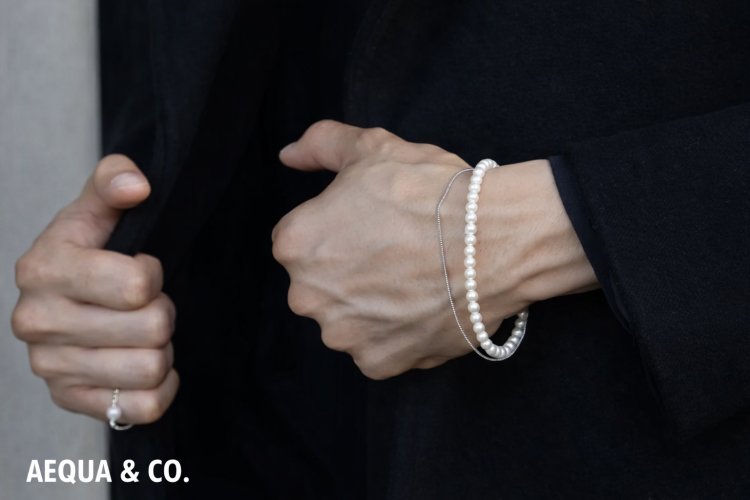
Men's pearl jewelry is strongest when treated as a design element rather than an accessory. One strand. One bracelet. One considered detail. That is often enough.
Start with simplicity. A single pearl necklace against a crisp white shirt creates contrast without chaos. Against black, it becomes architectural. Against earth tones, it feels organic and grounded.
Avoid layering too quickly. Let the pearls breathe. Space around them allows their texture and light to define the look. Precision begins with restraint.
When in doubt, remove one element. What remains should feel composed, not crowded.
2. Pair Softness with Structure
Pearls carry natural softness. To style them with confidence, introduce structure elsewhere.
Tailored blazers, sharp collars, structured overshirts, or clean-lined outerwear create a deliberate tension. The softness of the pearl meets the clarity of tailoring. The result is balance.
For casual settings, a fitted tee or fine-knit sweater works well. The key is silhouette. Oversized without intention feels accidental. Relaxed but measured feels controlled.
3. Understand Scale and Proportion
Confidence is often a matter of proportion. Smaller pearls offer subtlety. Larger pearls command attention. Neither is superior—only context defines their role.
If your outfit is minimal and monochromatic, slightly larger pearls can anchor the look. If your clothing carries texture or pattern, smaller pearls maintain harmony.
Bracelets should sit naturally on the wrist, not slide excessively. Necklaces should rest with purpose—either close to the collarbone for refinement or slightly lower for ease.
Precision is visible in these small adjustments. Length, spacing, and fit are never accidental.
4. Layer with Discipline
Layering pearls requires clarity. If combining chains with pearls, ensure one leads and the other supports. Avoid equal visual weight between layers. Hierarchy creates order.
Metal and pearl can coexist—silver for cool restraint, gold for warmth—but keep finishes consistent. Matte with matte. Polished with polished.
Mens pearl jewelry should feel intentional within the composition, not decorative. Each layer must earn its place.
If the look feels complex, simplify. The strongest statements are often quiet.
5. Match the Mood, Not the Occasion
Pearls are no longer confined to formality. They adapt. The difference lies in styling.
For formal settings, pair pearls with clean tailoring and minimal accessories. Let them serve as the focal point.
For everyday wear, combine pearls with denim, structured trousers, or relaxed tailoring. The contrast creates depth without effort.
Confidence comes from comfort. If the styling feels forced, it will show. When pearls align with your personal rhythm, they integrate seamlessly.
6. Wear Them with Stillness
The final element is presence. Pearls reflect light. They respond to movement. But they require composure.
Styling pearls with confidence is less about what others see and more about how you carry them. Shoulders relaxed. Movements controlled. Expression neutral.
Pearls amplify intention. They reveal whether a look was assembled or considered.
In the end, styling is not performance. It is alignment—between material and mindset, softness and strength, clarity and restraint.
Pearls do not ask for permission. They respond to precision.
And precision, always, speaks for itself.