How Much Does It Cost To Make 1000 Copies Of A Book?
Let's say you are printing a 32-page children's book: Printing cost per book = $5, Illustration cost added = $2 per book, Design and setup = $1 per book So total per book...
 peterbhenley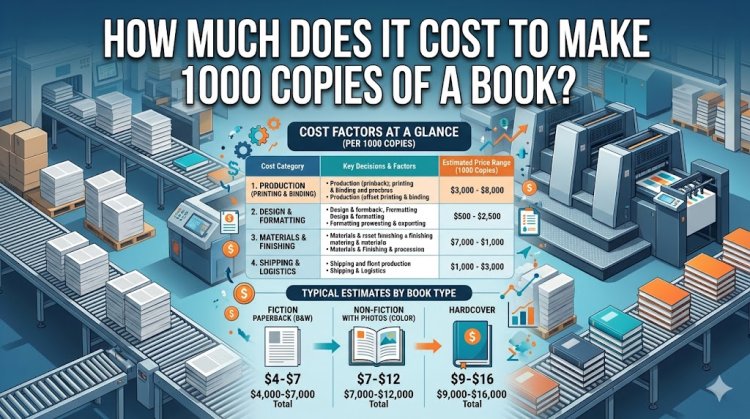
Printing books in bulk can save a lot of money, but the cost depends on many things. When you print 1000 copies of a book, the price is not fixed. It changes based on paper quality, book size, color pages, and design work. In this guide, we will break down the real cost in a simple way so you can understand it easily.
For many authors and publishers, printing 1000 copies is a big step. It means the book is ready for the market. But before printing, it is important to understand where the money goes. From printing to design and marketing, every part adds to the final cost. Let's look at it step by step in a very simple way.
What Is The Cost Of Printing 1000 Books In Bulk?
The cost of printing 1000 copies of a book can vary a lot. On average, here is a simple idea:
|
Book Type |
Cost per Book |
Total for 1000 Copies |
|
Black & white (simple book) |
$2 – $4 |
$2,000 – $4,000 |
|
Mixed (some color pages) |
$4 – $7 |
$4,000 – $7,000 |
|
Full color book |
$6 – $12 |
$6,000 – $12,000 |
So the total cost for 1000 copies can be anywhere between $2,000 to $12,000. This is a wide range because every book is different.
What Affects the Cost The Most
There are a few main things that change the price:
● Paper quality
● Number of pages
● Color vs black & white
● Binding type
● Cover design
Even a small change in pages can increase the cost by 10% to 25%. For example, a 50-page book will cost much less than a 200-page book. Many authors also work with children's book publishers when planning bulk printing. Publishers often help decide the best format, pricing, and print quality so the book can sell well in the market.
How Much Money Goes Into Different Parts of Book Printing
When you print 1000 copies, the total cost is not just printing paper. The money is divided into different parts. Here is a simple breakdown:
|
Part of Cost |
Percentage |
What it means |
|
Printing |
50% – 60% |
Paper, ink, and machine cost |
|
Design work |
10% – 15% |
Book layout and cover design |
|
Binding |
10% – 15% |
Joining pages and finishing |
|
Packaging |
5% – 10% |
Wrapping and packing books |
|
Other costs |
5% – 10% |
Shipping, small charges |
So if your total cost is $5,000, almost $2,500 goes only to printing. This shows how important printing decisions are.
Simple Ways to Reduce Printing Costs
Printing one thousand books can feel really expensive. There are smart ways to make it cheaper.
One easy way to do this is to reduce the number of pages in the books. If you have fewer pages, you will use less paper and less ink.
Even if you only reduce the page count by 10 to 20 pages, this can cut the costs of printing the books by 10 to 15%. Printing one thousand books is a job, and reducing the page count can make a big difference in the cost of printing the books.
Another way is to choose black and white printing instead of full color. Color looks nice, but it can double the cost in many cases. You can also compare different printers. Prices can change from one company to another, sometimes by 20% or more.
Here is a quick view:
|
Method |
Possible Savings |
|
Fewer pages |
10% – 15% |
|
Black & white printing |
20% – 50% |
|
Bulk printing deals |
10% – 25% |
|
Simple binding |
5% – 10% |
Small changes can make a big difference when printing 1000 copies.
Why Illustration Changes the Total Cost
If your book has images, the price goes up. Illustrations take time and skill. Each page may need a custom drawing.
For example:
|
Type of Book Illustration |
Cost per Page |
|
Simple sketches |
$10 – $30 |
|
Detailed color art |
$50 – $150 |
|
Premium artwork |
$150 – $300 |
This is why children's book illustration cost can increase the total budget very quickly.
A picture book with 20 pages of full-color art can cost much more than a simple text-only book.
Small example of total cost
Let's say you are printing a 32-page children's book:
Printing cost per book = $5
Illustration cost added = $2 per book
Design and setup = $1 per book
So total per book = $8
For 1000 copies: 1000 × $8 = $8,000 total cost
Some authors also work with children's book marketing services after printing. This helps them promote the books and reach more readers after production. Good marketing can help recover printing costs faster if the book sells well.
Final Tips on Book Printing Cost
Printing books is a big step for any author. The cost depends on many small choices like pages, color, and design.
For a 1000-copy print run, most authors spend between $2,000 and $12,000. Some spend less, and some spend more, depending on quality.
It is always better to plan early and understand your budget before printing. This helps avoid surprises later.
Working with experienced children's book publishers can also help you make better decisions about printing, design, and overall cost planning. They often guide authors on how to balance quality and budget in a smart way.
Frequently Asked Questions
1. Is printing 1000 books cheaper than small printing runs?
Yes. When you print a lot of books at once, it usually costs less per book. The more books you print, the less each book costs.
2. Why do the costs of illustrations vary greatly from one to another?
The cost of illustrations depends on what they look like, how many details they have, and how long they take to make. If the art is simple, then it is cheaper, but if the art is very detailed and has a lot of colors, then it costs more.
3. Can I save money on printing costs if I am an author?
Yes. You can save money by choosing a simple design or printing your book in black and white.
4. Is it important to market your book after it is printed?
Yes. If you promote your book well, you can sell it faster. Book marketing is important because it helps you sell books and recover your printing costs.
The Ending Notes
Printing 1000 copies of a book is a big investment, but it can also be a smart one.
The total cost depends on many things, like design, pages, illustrations, and printing type. On average, most authors spend a few thousand dollars for a full print run.
If you plan carefully, you can control your budget and still produce a high-quality book. Simple choices can save a lot of money without reducing the value of your work.
A well-planned book is not just about printing. It is about creating something that readers will enjoy and remember.