Deep Tissue Massage: Benefits, Techniques, and What to Expect
Learn how deep tissue massage works, its potential benefits, common techniques, what to expect during and after a session, and important safety tips.
 Zenathome
Deep Tissue Massage: Benefits, Techniques, and What to Expect
Persistent muscle tightness can make everyday movement uncomfortable. Long hours at a desk, repetitive activity, demanding workouts and general physical stress can all leave certain areas feeling stiff or restricted.
Deep tissue massage takes a more focused approach than a traditional relaxation massage. Instead of simply applying harder pressure, a therapist uses slow, controlled techniques to work with deeper muscle and connective tissue while adapting the intensity to the individual.
Understanding how the treatment works, what it may help with and what a session actually feels like can make it easier to decide whether it suits your needs.
What Is Deep Tissue Massage?
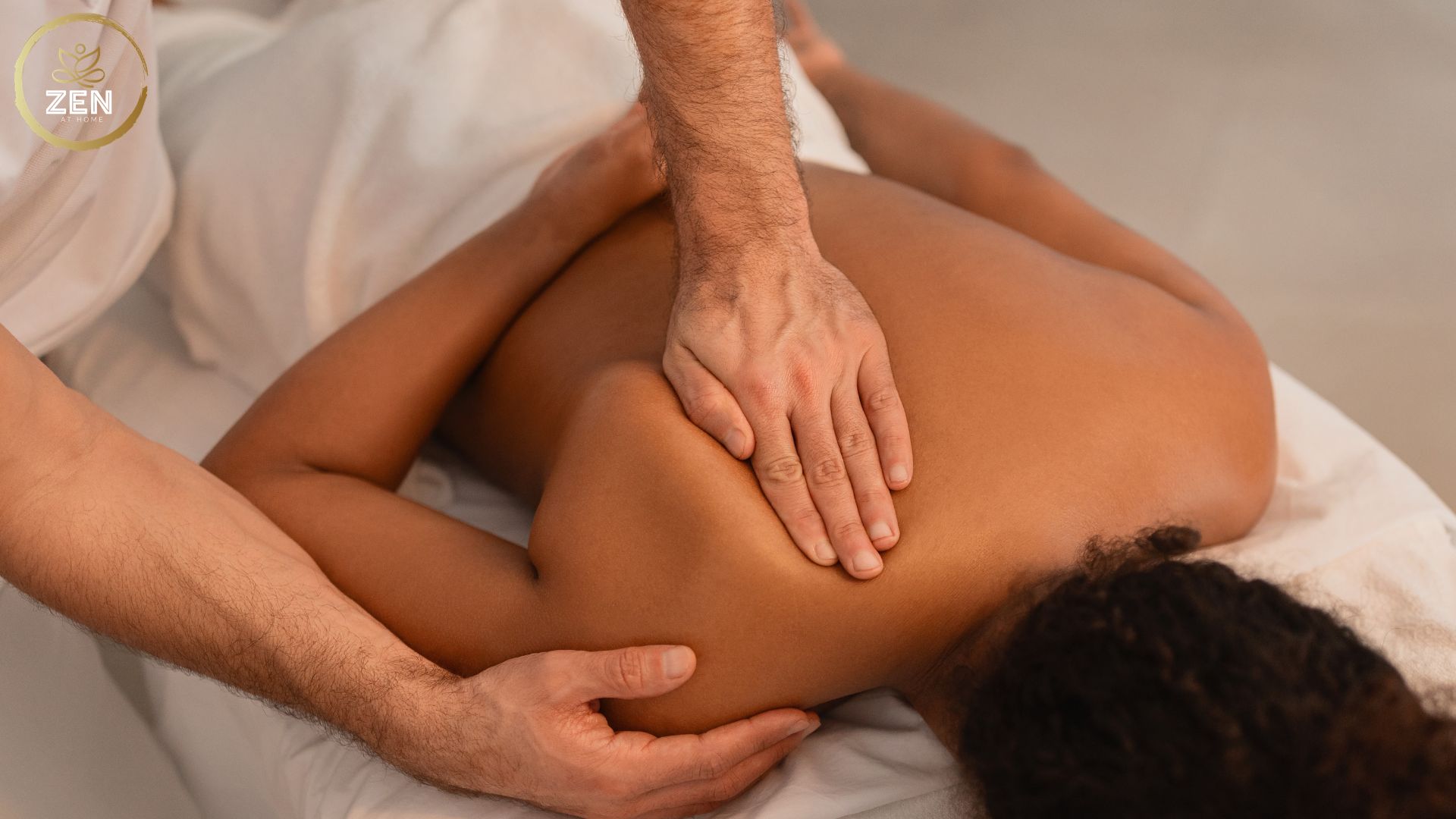
Deep tissue massage is a form of massage therapy that uses slow strokes, sustained pressure and focused manual techniques to address areas of muscular tension and restriction.
The therapist may work with muscles, fascia and other soft tissues rather than performing the same full-body sequence for every client. Treatment is often concentrated around areas that feel chronically tight, overworked or limited in movement.
A professionally delivered Deep Tissue Massage session should therefore be tailored to the body rather than defined simply by how much pressure the therapist can apply.
This distinction matters.
"Deep tissue" does not mean using maximum force. Effective work often depends on slowing down, warming the area first and gradually increasing pressure while monitoring how the body responds.
The American Massage Therapy Association similarly describes deep tissue work as involving slower strokes and firmer pressure, with therapists potentially combining several specialized techniques. American Massage Therapy Association's guide to deep tissue massage
How Does Deep Tissue Massage Work?
Muscles can feel tight for many reasons, including repetitive activity, prolonged positions, physical training and protective tension around a sensitive area.
During deep tissue massage, the therapist usually begins with lighter contact before progressing to slower and more focused work. This gradual approach allows the therapist to assess how the tissues respond instead of forcing pressure into a tense area immediately.
The goal may include reducing the sensation of tightness, improving comfortable movement and helping an overworked area relax.
Massage therapy can also influence how the nervous system responds to touch and discomfort. For that reason, the effect of treatment is not simply a matter of mechanically "breaking up" muscle knots.
Good deep tissue work combines technique, appropriate pressure, communication and the individual's response.
Potential Benefits of Deep Tissue Massage
People seek deep tissue massage for different reasons. Some want help with persistent muscular tightness, while others use it as part of their exercise recovery or general wellness routine.
Research on massage continues to develop, so it is better to think in terms of potential benefits rather than guaranteed outcomes.
1. Easing Muscle Tension and Stiffness
This is one of the most common reasons people choose deep tissue work.
Slow, focused techniques allow a therapist to spend more time on tight areas of the back, shoulders, neck, hips or legs. Some people notice that the area feels less restricted after treatment.
Cleveland Clinic notes that therapeutic massage can be used to address muscular tension and discomfort, while treatment is customized according to the person's individual needs. Cleveland Clinic's massage therapy guidance
2. Supporting Comfortable Range of Motion
Muscle tightness can sometimes make movement feel restricted.
A therapist may combine deep tissue techniques with stretching, range-of-motion work or myofascial methods. The objective is not to force a joint beyond its natural range, but to reduce soft-tissue restriction around the movement.
The result may be a temporary improvement in how freely or comfortably an area moves.
3. Supporting Recovery From Physical Activity
Training, repetitive movements and physically demanding work can leave muscles feeling tired or tight.
Deep tissue massage may form one part of a broader recovery routine by addressing areas that have been repeatedly loaded. Athletes are not the only people who may benefit; anyone who performs repetitive physical activity can develop similar muscular tension.
Massage should not, however, be used to hide a significant injury or replace an appropriate medical or rehabilitation assessment.
4. Helping Manage Some Musculoskeletal Discomfort
Massage therapy is sometimes used alongside other approaches for musculoskeletal discomfort.
Evidence varies according to the condition, and the response is highly individual. Massage is better viewed as one possible component of symptom management rather than a cure for the underlying cause of persistent pain.
The National Center for Complementary and Integrative Health advises people not to use massage therapy to postpone evaluation of a medical problem. NCCIH guidance on massage therapy
5. Encouraging Relaxation
Deep tissue massage is more treatment-focused than a light relaxation massage, but the two goals are not mutually exclusive.
Slow touch, a comfortable environment and the release of muscular tension can still leave a person feeling calmer after the session.
In other words, "deep" does not automatically mean stressful.

Common Deep Tissue Massage Techniques
Deep tissue massage is not a single standardized sequence. A trained therapist may select different techniques according to the area being treated, the client's comfort level and the purpose of the session.
Slow Gliding or Stripping Strokes
The therapist may apply slow pressure along the length of a muscle using the fingers, knuckles, forearm or another suitable contact surface.
The movement is usually slower than the sweeping strokes associated with a relaxation massage.
Sustained Compression
Instead of continuously moving across the skin, the therapist may hold controlled pressure over a specific area for a period of time.
Pressure should be adjusted according to the client's response.
Cross-Fiber Friction
Some therapists work across rather than directly along the direction of muscle fibers.
This focused technique may be used around particular soft-tissue restrictions, although it is not appropriate for every person or every area.
Trigger Point Work
A therapist may identify locally tender or tight areas and apply controlled pressure to them.
Trigger point techniques can feel intense, which makes communication especially important.
Myofascial Techniques
Fascia is connective tissue that surrounds and supports muscles and other structures.
Myofascial techniques generally use slower, sustained contact to work with areas that feel restricted. They may be incorporated into a deep tissue session rather than used as a completely separate treatment.
Stretching and Range-of-Motion Techniques
Some therapists combine massage with gentle stretching or controlled movement.
These additions can help the practitioner assess how an area moves before and after focused soft-tissue work.
Professional organizations describe deep tissue sessions as potentiall