Last Day of the Knowledge Kumbh: Large Crowds, Festival Concludes with a Promise to Return Next Year
Bhopal Literature Festival 2025 concludes with Dastaan Shankar Stotra, Orchha Kalam launch, UPSC success mantra, cinema discussions. 100+ experts insights on literature, culture, society.
 Pankaj Sharma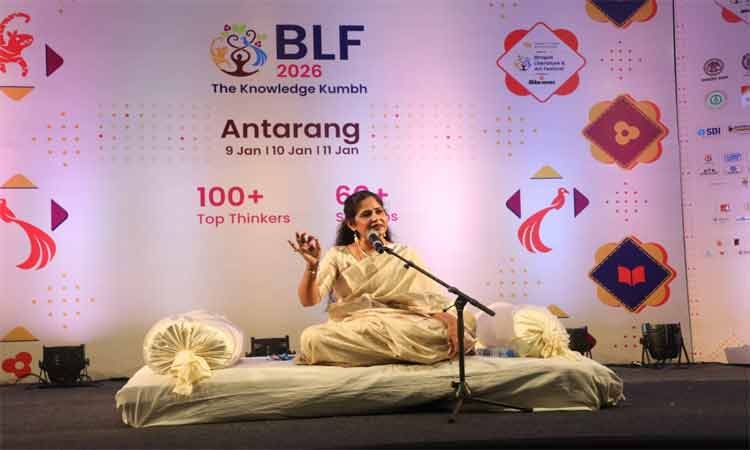
*From Ameen to Aasaan: The Radiance of Words” echoes in Antarang*
*The soul of cinema is magic, not logic” — Vinay Sapru and Radhika Rao*
*limbing Mount UPSC and Civil Services Life*
*rand launch of “Orchha Kalam”*
“An unhealthy person does not have the right to have a child” — Dr. Shiv Kumar Sarin*
Bhopal: The eighth edition of the Bhopal Literature Festival, held at the cultural complex of Bharat Bhavan, concluded on Sunday with lingering echoes of memories, ideas, and creative energy. This three-day “Knowledge Kumbh” wove words, sensitivity, and discourse into a shared platform, making the capital city Bhopal a witness to an intellectual celebration. Across more than 60 sessions on literature, art, culture, society, and contemporary thought, over 100 thinkers, writers, artists, and intellectuals from India and abroad shared their perspectives and experiences. Each day of the festival was filled with new ideas, questions, and conversations, where lines from books seemed to speak to life itself and thoughts reflected on the present and future direction of society. The final day too continued this intellectual celebration in its full vibrancy, with deep discussions on history, democracy, culture, constitutional values, art, and human concerns.
The closing evening moved beyond literary discussion into a spiritual and cultural experience. A captivating presentation titled “Dastaan Shankar Stotra,” centred on the life, philosophy, and intellectual journey of Acharya Shankaracharya, mesmerised the audience. Through words, music, and expressions, the performance brought Shankaracharya’s ideas alive and transformed the festival’s closing into a memorable cultural moment. Festival directors Dr. Raghav Chandra and Abhilash Khandekar were also present. In his closing address, Dr. Chandra promised that the festival would return next year.
Meanwhile, at the Antarang Auditorium, a lyrical and emotional session titled “From Ameen to Aasaan: The Radiance of Words” was held, celebrating poetry and literature. The session was moderated by Manju Mehta, with renowned poet Alok Shrivastav as the main speaker. He began with a ghazal and then wove words into emotion and music through his poems, creating a warm, intimate, and positive atmosphere in the hall. The session emerged as a living celebration of poetry, feeling, and the simple beauty of words.
Grand Launch of “Orchha Kalam”
As part of a significant session dedicated to art, history, and heritage, the book Orchha Kalam was formally launched. The book has been created by 1977-batch Indian Administrative Service officer of the Madhya Pradesh cadre, Dr. Vishwapati Trivedi, and his wife Mrs. Mona Trivedi. It presents rare photographs of Orchha’s wall paintings collected over a span of forty years, making it a living document of the region’s artistic heritage. Orchha Kalam explores the historical context of Bundelkhand, the architecture of Orchha’s palaces and temples, and the depth of its traditional mural art. The book also includes art critic Anand Krishnan’s special perspective on Orchha’s paintings, along with a detailed explanation of narratives from the Bhagavata Purana and their cultural influence. The book not only preserves Orchha’s rich cultural heritage but also makes it accessible to contemporary readers. This session stood out as one of the most important and memorable of the festival.
The Tribal Art Gallery offered visitors a rich and immersive glimpse into indigenous culture through a wide range of displays and activities. It featured handmade tribal paintings, traditional tattoos, artwork on clothes, clay pottery making, puppet shows, and finely crafted tribal jewellery. One of the highlights was the live demonstration of making chatni of ants, a traditional tribal delicacy, which drew much curiosity and interest. Together, these elements showcased the creativity, skills, and everyday cultural practices of tribal communities in a vibrant and engaging way.
The soul of cinema is not logic, but magic.” — Vinay Sapru and Radhika Rao
This session, focused on contemporary Indian cinema, music, and changing technology, was held as an engaging conversation with film and music directors Vinay Sapru and Radhika Rao. At the beginning of the session, both spoke about important milestones in their careers and mentioned the popular songs and films they have directed and produced. Sharing the creative process behind popular songs such as Sanam Teri Kasam, Dagabaaz Re, and Mast Mast Do Nain, they explained how music becomes the soul of a story.
The discussion then moved towards new technologies in television commercials and cinema. The speakers said that changing technology has given cinema a new dimension, but its core emotion remains the same. Radhika Rao clearly said that films need magic more than logic. She also spoke about the balance between budget, technology, and creative freedom. While talking about music, both shared their experiences related to the film Dabangg and emphasised that while technology may change, emotions never do.
The session proved inspiring for young people interested in cinema, music, and creativity.
The Mantra of Success: Self-Confidence, Uniqueness, and the Value of Time
In the session titled “The Winning Formula: 52 Principles of Success,” former Union Minister K. J. Alphons and Vineet Nahata, in conversation with Rupinder Barar, highlighted the core principles of success. The session became an inspiring platform for self-reflection, self-confidence, and choosing the right direction in life. During the discussion, the speakers described talent as the first step towards success and said that every individual has a distinct ability and identity. They advised young people to strengthen their “backbone,” meaning to stand firmly by their core principles and values. The speakers emphasized that every human being is unique — there is no one else like you in this universe — and therefore being yourself is the greatest strength. The session also discussed the importance of time, while describing money as a means of life. The speakers said that wasting time is like ignoring one’s own potential. They also made it clear that true power does not lie in position or authority, but in the ability to bring a smile to someone’s face. The immense capacity of the human mind and positive thinking were described as the keys to success.
The session became a source of inspiration for young people, encouraging them to believe in themselves and move towards meaningful success in life.
Dastaan-e-Shankar: The Stotra of Adi Shankaracharya
The consciousness of Advaita resonated in “Dastaan-e-Shankar”
The final evening of the Bhopal Literature Festival at the Antarang Auditorium became a witness to a rare confluence of spiritual consciousness, storytelling, and music, when the captivating presentation “Dastaan-e-Shankar: The Stotra of Adi Shankaracharya” introduced the audience to the life and philosophy of Shankaracharya. This presentation was not merely a narrative performance, but a living experience of India’s philosophical tradition. In this special presentation, Bharti Dixit presented the life story of Adi Shankaracharya in a sequential manner in the style of a dastaan. Beginning with the story of Shankaracharya’s birth, she wove his childhood, extraordinary talent, and deep faith in dharma into a vivid narrative. At every stage of the dastaan, there was a harmony of words, emotion, and performance that transformed the stage into a space of contemplation and reflection. During the performance, Shankaracharya’s renunciation, his connection with the guru tradition, and the spread of Advaita Vedanta were portrayed with great sensitivity. Bharti Dixit also showed how Shankaracharya, at a very young age, travelled across India to re-establish the intellectual unity of Sanatana Dharma. The establishment of his four monastic centres and episodes of philosophical debates were also presented effectively, giving the audience a sense of his extraordinary personality and far-sighted vision.During the performance, the atmosphere of the Antarang Auditorium became deeply spiritual.
“Children’s literature needs harmony between children and teachers.” — Manjari Shukla
In this session focused on children’s literature, speaker Manjari Shukla said that children’s literature is equally important for teachers, not just for children. She said that sensitive topics should also find a place in children’s literature. As an example, she referred to literature about a transgender child named Anshu and his struggles, saying that such stories can become a powerful medium to convey the right message to students.
Manjari Shukla said that when writing stories for children, the writer has to enter into the emotions of the characters. Without touching the characters’ feelings, the reader cannot connect with the story. Children’s literature gives a sense of belonging to children, and therefore it must be written like a child, by sitting among children. Sharing her experiences as a teacher, she said that although school life may be left behind, teachers are never left behind. A teacher has a deep impact on the lives of students, and for this reason the role of the teacher is extremely important in children’s literature. During the session, through several stories, she made it clear that harmony between children and teachers is essential in children’s literature.
The session was moderated by Rachna Samaddar.
A Conversation with Young Author Vaishnavi Anantha: Imagination, Inspiration, and the Writing Journey
On the third day of the ongoing festival at Bharat Bhavan, a special session was organized for literature lovers featuring a conversation with young author Vaishnavi Anantha. The session offered an opportunity to closely understand her writing journey, creative thinking, and her perspective on youth literature.
Having created a distinct identity in the literary world at a young age, Vaishnavi Anantha has so far written four novels based on stories from different genres. During the conversation, she mentioned her popular book Jazz Gang, which is especially written for teenage readers. She also described her book Control Alt Archive as an inspiring story of transformation from a loser to a winner. In the session, Vaishnavi shared her writing experiences and said that she has tried to look at and present the character of Goddess Sita from a different perspective. She also spoke about the courage and leadership of Rani Lakshmibai, whom she described as a source of inspiration for today’s students. It was also mentioned that many of Vaishnavi Anantha’s books have been sold so far, reflecting her popularity among readers. At the end of the session, she gave a message to students to identify their passion and pursue it with full confidence.
“An unhealthy person does not have the right to have a child.” — Dr. Shiv Kumar Sarin
In this session, renowned physician Dr. Shiv Kumar Sarin emphasized the need for health education and said that when a person’s health deteriorates, they regret their lifestyle choices. He said that every family should prepare a family tree so that future generations can be made aware in advance of the risk of possible genetic diseases. Dr. Sarin said that his book is based on facts as well as emotions, which is rarely seen. He clearly stated that if parents are not healthy, the chances of children being unhealthy increase. Sharing experiences of serious illnesses among small children and young people, he said, “If you yourself are not healthy, you do not have the right to have a child until you are completely healthy; otherwise, you are weakening the future of the nation.” He also said that health education is more important than ten years of school education. While general school education is a responsibility, health education is the foundation of life.
The session was effectively moderated by Ashok Lavasa.
A session on “Cybertech, Space, and Geopolitics”
The panel discussed emerging issues including GPS spoofing, the American operation in Venezuela, cyber aspects of Operation Sindoor, digital arrests, and cyber scams, where Lt. Gen. M. Unnikrishnan Nair and Vivek Johri were in conversation with moderator Anirudh Suri. Vivek Johri began by referring to the United States’ “Operation Absolute Resolve” in January 2026, which he described as an advanced cyber warfare operation during which internet connectivity in Caracas, Venezuela, was completely shut down and some Chinese and Russian satellites were also reportedly disrupted. He said that even during the India–Pakistan standoff, cyber warfare had emerged as a common pattern in modern conflict and would serve as a template for future wars, as it can affect essential services, national security, and the economy of any nation.
He added that alongside traditional geopolitical tools such as the army, navy, air force, and intelligence agencies, cyberspace and outer space have now become critical strategic domains. Raising the question “Digital colonialism: inevitable or not?” Johri said this would be a key challenge in the coming years.
Lt. Gen. Nair shared his views by highlighting how vulnerable people have become in modern digital life. He said that citizens often lack awareness of technology, which makes them easy targets. He spoke about the influence of social media on daily life and how it has transformed society. He noted that the data of citizens now exists online in cloud space, making it accessible to cyber criminals who could be neighbors, acquaintances, terrorist groups, or rival nations. This, he said, underlines the need for strong data protection not only at the national level but also for every individual. He concluded by saying that citizens must realize that they are not merely spectators in modern wars but are part of them because of their digital footprints.
Military Life Is Very Different from Its Portrayal in Films, Says Major Manik M. Jolly
A session highlighting the realities of military life was held at the Vagarth Auditorium, moderated by Colonel Sanjay Pande. The session featured Major Manik M. Jolly, who shared real-life stories of young Indian Army officers, focusing on their hardships, sacrifices, and experiences in counter-terrorism operations.
Major Jolly said that the real stories of military personnel are very different from what is shown in Bollywood films. He spoke about the challenges faced by young officers and the demanding conditions under which they serve. Sharing a personal experience, he recalled a moment when he was under direct fire and felt afraid, but did not show it in front of his troops. He said he stayed calm, lit a cigarette, and asked his soldiers to charge forward. He spoke about the deep faith soldiers place in their commanding officer, for whom they are willing to follow without question, even unto death. He said that the characters in his book are either real people or based on real individuals who possess those virtues. He added that he tries to present the truth about the Army through his writing. Major Jolly also spoke about how fear becomes a powerful teacher in the Army, helping officers learn far more than they would in civilian life. He emphasised that the Army shapes individuals into leaders through discipline, responsibility, and shared hardship.
The session offered a candid and powerful insight into the lived realities of military service.
Experts Share their Views on Women Leaders in Indian Politics
A session on women leaders in Indian politics was held as part of the festival, with Kausar Kidwai as the moderator. Senior journalist and author of the book She the Leader: Women in Indian Politics, Nidhi Sharma, was the main speaker and engaged in an insightful conversation on the subject.
Drawing from her real-life experiences and research, Nidhi Sharma highlighted the importance of women holding positions in policy-making. She also spoke about the issue of “working mother’s guilt,” referring to her interviews with leaders such as Smriti Irani and Pratibha Patil, and the challenges they faced in balancing political careers with relationships with their children. She said that the standards applied to women, especially in politics, are very different from those applied to men. Addressing the question of whether India is ready for women to participate in politics on a large scale, Sharma said she was not certain. She pointed out that, according to her research, reservations often remain limited to textbooks, while in practice proxy roles are common, with male family members exercising actual power. She also emphasised the need to pay greater attention to the North-East region, which she said remains largely invisible in mainstream media.
Sharma explained that the criteria for selecting leaders in her book were those who had won popular elections to the Lok Sabha or Rajya Sabha, with only two exceptions, and that the leaders were presented in chronological order.
A Conversation on The Golden Road: Ancient India’s Civilisation and Its Impact on the World
A special virtual session was organised on the theme “The Golden Road: How Ancient India Transformed the World.” In this session, renowned author and historian William Dalrymple was in conversation with Raghav Chandra. The discussion centred on his well-known book The Golden Road, through which ancient India’s civilisation and its global contributions were explained. During the conversation, William Dalrymple spoke about how India’s ancient civilisation influenced the world through knowledge, culture, and ideas. He discussed in detail the interconnections between India’s various cultural regions, traditions, and civilisations.
The role of Buddhism was discussed in particular, and it was explained how Buddhist ideas that originated in India reached many countries across Asia. Along with this, India’s cultural heritage and values were explained through historical and mythological references such as Kurukshetra, the Yamuna River, and the Lanka war.
William Dalrymple highlighted the importance of dharma, karma, Hinduism, and Buddhist philosophy, saying that these values continue to guide society even today. At the end of the session, addressing the youth, he encouraged them to understand their culture, history, and roots.
God Made Us, God Made Humans, but We Made Anglo-Indians
In an insightful session held at the SBI Rangdarshini Auditorium, author Vikas Kumar Jha provided a detailed discussion about his book, “McCluskieganj”. The session was moderated by Seema Verma, who, through an engaging interaction with the author, highlighted various aspects of the book.
In this session, Vikas Kumar Jha introduced the story of the rise and fall of Anglo-Indian communities in India in McCluskieganj, analysing it from a historical perspective and social and human angles. McCluskieganj has been showcased through a video story by Vikas Kumar Jha, which vividly introduced this place and its people to this audience and helped this audience to have a better understanding of this place and its people.
The author has also spoken about his other novels, apart from throwing light upon the political and social participation of the Anglo-Indian community. Almost 90 per cent of the characters in his book were real, he revealed with a smile; many of them were still alive, he stressed to illustrate the reality of his book.
At last, towards the end of the session, a story of Ilona Ghosh in a melancholic mood was shared. Today, she is living all alone in Ranchi. She is a symbol of the memory of the Anglo-Indian community.
General Sundarji: The Strategist Who Shaped Both India’s Military and Politics
The seminar “General Sundarji: Brasstacks, Blue Star and Bofors” is based on the military experiences and strategic approaches adopted by General Sundarji. The seminar is handled by Probal Dasgupta. He is an author who has actually published a book named “General Sundarji: Brasstacks, Blue Star and Bofors.” The seminar is moderated by “Lieutenant General Milan Naidu, former Vice Chief of the Indian Army.”
“The Indian Army guards the country from the Maldives to the Deserts of Rajasthan, and from the Mountains of Arunachal to the Great Himalayas,” reiterated Probal Dasgupta, saying that Sundarji’s experience included the whole military expanse in between.
He started with Sundarji being an Army General who not only knew how military strategy could work, but he also knew the politics inside and out. From saving Punjab to building military pressure against Pakistan in the Rajasthan deserts, on occasions like Operation Blue Star, the strategic brilliance of General Sundarji came into clear view. He had that uncanny ability to anticipate situations that were pretty unsure many meters ahead. More, Probal Dasgupta added that General Sundarji responded to the moves of China without firing a single bullet. He had great willpower and restraint. Innovation within the Army was really encouraged by him, and thus he amazingly took the surprise to China by deploying the equipment to be used in the border areas with the help of helicopters. He was always upfront, and under no pressure, he never moved back on his decisions. He has the quality of dealing with every political situation with the greatest of ease and converting it into his advantage.
Echoes of Tradition, Psychology, and Society in the Folk Tales of the Himalayas
In the session titled “Folk Tales of the Himalayas,” focused on the rich folk traditions of the Himalayan region, an engaging conversation took place between authors Mona Verma and Vinita Dhondiyal Bhatnagar. The session explored the roots of Himalayan folk tales and their cultural significance in detail.
The speakers said that the folk tales of the Himalayas are not just stories but mirrors of the region’s society, beliefs, and worldview. They explained how these stories, through their origins and traditional forms, have guided society from generation to generation. During the discussion, references were also made to stories connected to the Mahabharata, which continue to survive through folk traditions. The session also examined folk tales from psychological and socio-psychological perspectives. The speakers said that these stories deeply contain insights into the human mind, social behaviour, and everyday life experiences. Through folk tales such as those involving nose-cutting, the emotions of honour, dignity, and fear within society were clearly illustrated.
Session Explores Key Movements and Trends in French Literature
A session on French literature was held at the SBI Rangdarshini Auditorium, with Virginie Bouyx as the speaker and Prashasti Dubey as the moderator. Virginie Bouyx explained the key movements in French literature, including Modernism, Surrealism, and Existentialism. She also spoke about new modes of writing such as automatic writing, where a writer begins writing freely and allows thoughts to flow without conscious control. Discussing current trends in French literature, she referred to the re-emergence of autofiction, a form that combines autobiography with fiction. She also spoke about the exploration of themes such as trauma, including incest, health, mental health, war, exile, and social and political critique. She gave examples of how contemporary French literature engages with social and political reforms and reflects the concerns of people and society. The session offered an insightful overview of the evolution and present directions of French literature.
How We the People Shape Our Constitution
And thus, in the Constituent Assembly in 1946 itself, “We the People of India” gave a formal expression to the idea of freedom itself. “How We the People Shape Our Constitution” is a panel discussion with political thinker and author Neera Chandhoke in conversation with Shlok Chandra on the historical evolution of the Indian Constitution, its ideological moorings, and its relevance today. Neera Chandhoke explained that equality, liberty, justice, and fraternity, the very central ideas of Indian democracy, have been borrowed from no imported ideology but are embedded in India’s own political consciousness. The idea of constitution-making in India began to take concrete shape as early as the 1895 Constitution of India Bill, which was then followed by the Commonwealth of India Bill of 1925, the constitutional draft prepared by Motilal Nehru in 1928, and various resolutions of the Congress, all of which had iterated these constitutive ideas. She stated that in the 1946 Constituent Assembly of India, “We, the People of India” formally embodied the same idea of freedom for which thousands of Indians had struggled and made sacrifices.
Similarly, Neera Chandhoke pointed out that on issues of arbitrary political authority and uncertainties of a developing economy, the Constitution empowered civil society to protect the rights of ordinary citizens. Together with the creative interpretations of the judiciary, the Constitution provided a sound basis for social interventions.
Referring to her book, she explained the constitution-making process, the role of the Constitution in society, and its moral and political character. She mentioned the period of the Simon Commission in 1928 and the multi-dimensionality of secularism. Neera Chandhoke said Jawaharlal Nehru gave a concrete definition of secularism in his book Dharm Nirpeksha. Speaking on the contemporary issues, she attacked the bulldozer actions happening in some states as totally against the constitutional values. She concluded by saying that the Constitution protects us; now, it is our duty to protect the Constitution.
Witnessing to Truth in the Blaze of Environmental Crisis: A Conversation on “Testimony by Fire”
Amongst the highlights, there was a keynote session that took place at SBI Rangdarshini Auditorium, which was on ‘Crisis in the Environment and Literature.’ This session involved a dialogue between Dr Atulya Mishra and Dr Seema Raizada. The dialogue was based on Dr Atulya Mishra's book ‘Testimony by Fire.’ This book focuses on how there has to be a realization regarding the nexus between environment, society, and politics.
The author stated that it is a mix of fiction as well as non-fiction, which revolves around actual characters as well as actual places. Some of the topics that were discussed during the meeting include ecology, scientific journals, social aspects of the environment, sustainable development, politics in India, and environmental activism.
The seminar not only increased awareness regarding environmental issues but also presented literature as a potent manifestation of modern ecological challenges.
Climbing Mount UPSC and Civil Services Life
The session “Climbing Mount UPSC and Civil Services Life” included an enlightening talk on the preparations and struggles for the civil services. Senior officers of the IAS, Sajjan Yadav and K. M. Acharya, interacted with the youth in this session. Sajjan Yadav, an IAS officer, spoke about the rationale for writing his famous book “Climbing Mount UPSC and Civil Services Life.” The book has already been translated into 10 different languages, and the book was made up of the success stories of seven candidates who passed the UPSC Civil Services Exam after a tough fight, he said.
Sajjan Yadav said, "I am from a small village in Haryana, and I chose to be an officer. Though that is what I wanted, I couldn't achieve it on the first attempt. But I didn't give up, and with dedication and hard work, I was able to do it." He explained that the civil service is a secure and stable job that not only fetches recognition but is an opportunity to make decisions and bring some change to society. Calling it a “travel shooter,” he stated that one can get heard through the civil service that he is being heard.
In his book, the author spoke of the incident of the son of his domestic help, whose name was Bharat Singh, and despite limited means, he also passed the exam. Later, in his book, he spoke of the inspiring story of Minnu and Anjali Sharma. Anjali Sharma from Sikkim had become blind because of a brain tumor in Class 10, but then she prepared for the civil services exams through YouTube and audio material available and passed the exam.
Sajjan Yadav was asked if every candidate for the UPSC faces a low period during preparation, but it requires stronger examination and service to overcome it with patience, wisdom, and self-confidence. In the same event, K. M. Acharya gave a talk on the operations of the civil services, administrative tasks, and the three categories of civil services. This was moderated by R. Parshuram.
“India must reduce its dependence on China.” — Ashok Kantha
A significant session titled “Decoding India–China Relations” focused on the current state of India–China relations and future challenges. The speakers at the session were senior diplomat Ambassador Ashok K. Kantha and senior Indian Army officer Lieutenant General S. L. Narasimha. The session was efficiently moderated by Ambreen Khan. Ambassador Ashok Kantha said that India–China relations have structural problems, and addressing them requires small but firm steps. He clearly stated that China cannot be fully trusted, as it supports Pakistan not only on the battlefield but also in spreading misinformation and negative propaganda. He emphasized that instead of expanding border-related agreements with China, India needs to strengthen them so that strict action can be taken in case of violations. He also said that China is trying to put pressure on India by restricting the supply of key resources such as magnets. Therefore, India must reduce its dependence on China. He said that conflict with China does not take place on just one front, but on multiple levels, and that India–China tensions will never be normal. Lieutenant General S. L. Narasimha said that the Indian Army’s approach has always been balanced and clear. He said that because there are no clear markings on the ground along the Line of Control, patrols often lead to tense situations. He said that several mechanisms exist to prevent disputes, but when these mechanisms fail, confrontations occur. He made it clear that India cannot compromise on its borders, regardless of the type of pressure involved.
“Even while serving the Mughal Empire, Man Singh remained Hindu and the king of his own kingdom.” — Reema Hooja
The session titled “Raja Man Singh: Emperor Akbar’s Favorite General,” held at the Antarang Auditorium, became an engaging confluence of history, literature, and culture. The speaker of the session was renowned historian Dr. Reema Hooja, while the session was moderated by Raghav Chandra, President of the Bhopal Literature Festival, who conducted it in an engaging manner while referring to her book. Referring to her book on Raja Man Singh, Dr. Reema Hooja displayed illustrations from the Akbarnama and highlighted the deep relationship between Akbar and Man Singh. She said that Akbar regarded Raja Man Singh like a son and had special affection for him. Images of Akbar’s court and wrestling scenes between the two reflect the depth of this relationship. She said that in writing history, especially biographies, the writer must remain objective, although a faint shadow of personal perspective is inevitable. Dr. Hooja also clarified that there was no ancestral dispute between Raja Man Singh and Maharana Pratap, and that they also had family ties.
She explained that Raja Man Singh had been associated with the Mughal court since childhood, and therefore respected both Rajput and Mughal cultures. He also achieved victories in Afghan regions and, while serving the Mughal Empire, remained an independent king of his own kingdom. Giving examples of religious tolerance, Dr. Hooja said that Raja Man Singh built both temples and mosques in places such as Gaya, Patna, Kolkata, and Sialkot. The Govind Dev Temple in Mathura is especially notable, which he had built using donations from the Mughal Empire. Showing Man Singh’s devotion to Hindus, she said that when Pathans had occupied the Jagannath Puri region, Man Singh defeated them and handed the temple back to the Hindus. The session presented Raja Man Singh as a warrior and ruler who balanced power, religion, and culture, and thus carved a distinct identity in history.
Need for literature focused on the unique features of every district
In the session titled “Role of Culture in Making a Better Society,” speaker Prabhat Tiwari spoke in detail about Madhya Pradesh’s rich cultural heritage, historical monuments, and traditions as a strong foundation for building society. Prabhat Tiwari said that Madhya Pradesh is not only the heart of the country geographically, but also in terms of cultural diversity. Its forts, temples, folk arts, and traditions are not just memories of the past, but cultural pillars that guide the present and the future. He said that cultural consciousness plays an important role in improving any society, and literature is the most powerful medium to keep this consciousness alive. During the session, Prabhat Tiwari invited representatives from various districts of the state present at the festival to the stage and requested them to highlight the special features of their respective districts. In this sequence, Prahlad Singh Sikarwar from Morena spoke about the historical, cultural, and folk traditions of the Chambal region. From Anuppur, Sandeep Shivhare highlighted the district’s tribal culture, folk songs, and natural beauty. Rajendra from Shajapur spoke in detail about the district’s religious and historical heritage and cultural events. He called for the creation of literature focused on the unique features of every district of Madhya Pradesh so that local culture can gain recognition at the national and global level. The session was moderated by Brajesh Rajput.
A Discussion on Sexuality, Rebellion, and God in the Artistic World of F. N. Souza
A session titled “Sexuality, Rebellion and God in the Works of F. N. Souza” was held at the SBI Rangdarshini Auditorium, focusing on the creative world of the renowned artist F. N. Souza. Janita Singh was present as the speaker, in conversation with Dr. Meera Das. During the discussion, the speaker described Souza’s works as deeply compelling and philosophical, and spoke in detail about elements such as physical power, aesthetic sense, obscenity, and vulgarity present in his art. The session also included an in-depth discussion on the Devi Mahatmya, the feminine principle, and goddess symbolism. Special emphasis was placed on the fearless way in which Souza portrayed God, rebellion, and the complexities of the human mind through his art and paintings. Sharing a quote, it was said: “The Renaissance portrayed women and men as beautiful, but when I painted them, I showed the hell within them — and that was beautiful.”
During the session, F. N. Souza’s paintings were also displayed, and it was mentioned that he began his artistic journey with the female form. The session concluded with the powerful idea that “we should all be feminists.”