5 Nitrile, Latex, or Vinyl? Choosing the Right Protective Gloves for Clinical and Laboratory Settings
Compare nitrile, latex, and vinyl gloves for clinical and laboratory use. Discover the right protective gloves for safety, comfort, durability, and B2B healthcare needs with Romed.
 romed
romed 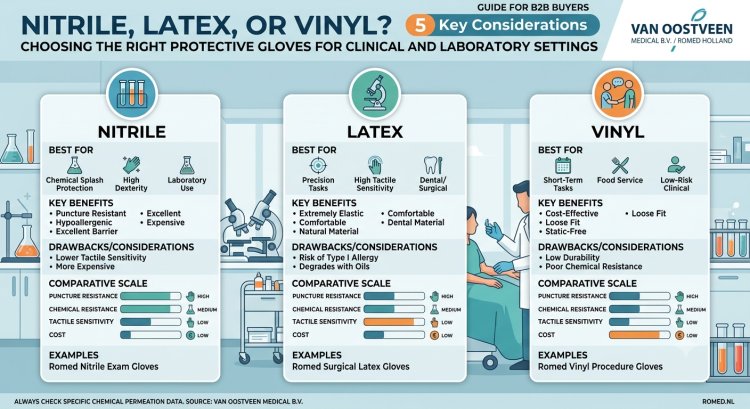
Protective gloves play a vital role in infection control, professional safety, and workplace hygiene. Whether you work at a hospital, laboratory, clinic, or any other healthcare-related establishment, the right disposable gloves can keep you, your equipment, patients, and colleagues safe from potential bacteria and contaminants.
The most common disposable glove materials include nitrile, latex, and vinyl. While all three types offer protection, they also possess unique qualities and advantages that make them suitable for different applications. To be able to choose the most fitting material, it is crucial to familiarize yourself with their main advantages and disadvantages.
For healthcare institutions and B2B buyers, it is vital to make the right choice when purchasing gloves in bulk. The three materials have numerous benefits, including high durability, elasticity, resistance, and more. If used appropriately, disposable gloves can keep you protected and comfortable while doing your job.
1. Nitrile Gloves: A Multipurpose and Reliable Option
Nitrile gloves are made from synthetic rubber and have become among the most popular disposable glove options in the medical industry. They offer superb flexibility and tensile strength while protecting the wearer’s hands from various bacteria, contaminants, and chemicals. The material is also highly durable and resistant to punctures and tears, making it a reliable option in clinical settings.
Additionally, nitrile is a great alternative for people with latex allergies - as such gloves are completely latex-free. These qualities make nitrile gloves perfect for a wide range of settings, including medical institutions, laboratories, dental clinics, and many others. Their superb flexibility and snug fit allow for dexterous movement and are therefore ideal for delicate procedures.
As a B2B buyer looking for a reliable and multipurpose option, you may find nitrile disposable gloves to be an excellent choice for your medical establishment or business.
2. Latex Gloves: A Classic Material with Unparalleled Comfort and Sensitivity
Latex gloves are made from natural rubber and have long been a popular choice among clinicians and medical workers. Latex material is exceptionally elastic and flexible and can therefore conform to the shape of the wearer’s hands, offering superior comfort and sensitivity. Such qualities are especially valuable in medical settings, as they allow for delicate movements and precise motions without compromising hand safety and comfort.
Latex gloves can be worn in a wide range of settings and are therefore highly versatile. However, it is crucial to note that natural latex can cause skin irritations and allergies in some people. Healthcare facilities considering latex gloves must assess the possible risks and ensure that such gloves do not pose a danger to their patients and staff.
When used in appropriate settings and by the right personnel, latex disposable gloves can offer exceptional comfort, flexibility, and sensitivity. If you are a B2B buyer looking to purchase medical-grade gloves, make sure to consider latex gloves and have a reliable supply of hypoallergenic gloves for those who may have a latex intolerance.
3. Vinyl Gloves: Affordable Protection for Everyday Use
Vinyl gloves are made from polyvinyl chloride (PVC) and are usually a more affordable alternative to nitrile and latex. They are typically suitable for lower-risk activities and tasks and, therefore, are perfect for everyday use. Additionally, being latex-free, vinyl gloves are a great option for people with latex allergies.
Vinyl gloves are usually cheaper than other two materials, making them perfect for organizations looking to reduce their overhead costs. However, they are also lower in quality and may be uncomfortable due to their looser fit. They are typically suitable for occasional use and short procedures where high durability, flexibility, and sensitivity are not required.
For B2B buyers searching for a budget-friendly option, vinyl disposable gloves can be a great option for low-risk activities and everyday use.
4. Comparing Nitrile, Latex, and Vinyl Gloves: What Is the Best Choice?
When considering what kind of disposable gloves to purchase, it is essential to prioritize factors such as application, comfort, durability, and cost. All of the three materials can be used in a wide range of settings, but some of them may offer more substantial protection and comfort than others. If you are looking for an affordable, everyday-use glove material, vinyl may be the best option.
Nitrile is considered to be the most durable and versatile material and is therefore suitable for most medical settings. If you are in the market for high flexibility, sensitivity, and comfort, then latex gloves could be a great option, provided that there are no latex allergies at your workplace.
In terms of application, nitrile, latex, and vinyl each have their uses. While nitrile is a great universal material, vinyl gloves are cheaper and can be used in less demanding settings, and latex gloves are ideal for delicate procedures.
When purchasing bulk medical supplies, healthcare facilities and B2B buyers must be familiar with the differences between the three materials, the characteristics of their application, and the relevant sizing, thickness, cuff design, powder-free options, standard compliance, packaging, and other specifications.
5. The Importance of Choosing the Right Material
When it comes to the healthcare industry, disposable gloves are often bought in bulk. Therefore, when making a purchase, it is crucial to choose the material that will provide the required comfort and protection. At the same time, a B2B buyer should also consider the intended use and other factors, such as the potential risks and dangers of the work environment. Some settings require more protection, while others may not be as demanding. A healthcare facility may also have different departments with varying levels of risk, making it necessary to purchase different materials for each.
As a B2B buyer, it is always essential to keep in mind that the best gloves are those that you will actually wear and use on a regular basis. A combination of the three materials may be required at different facilities, depending on the level of risk and comfort demanded by the specific setting.
For businesses and organizations that require high-quality disposable gloves on a regular basis, Romed offers medical supplies and solutions for professional clients. When purchasing from Romed, B2B buyers can choose from a variety of materials, sizes, and other specifications to get the best possible option for their business needs.