India Pre-Clinical Research Market Trends, Opportunities & Forecast to 2030
The India Preclinical Research Market size was valued at around USD 175 million in 2024 and is projected to reach USD 300 million by 2030. Along with this, the market is estimated to grow at a CAGR of around 11.5% during the forecast period (2025-30).
 johnryan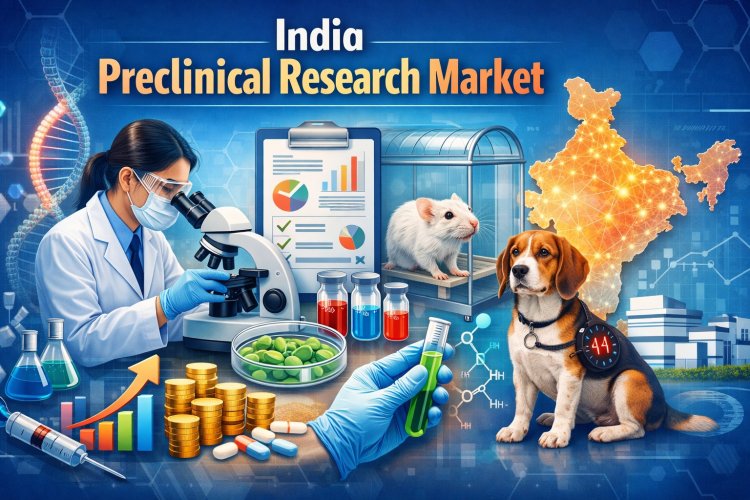
India pre-clinical research market is fast developing to be a central force in the life sciences and drug development ecosystem in the country and an opportunity to both innovators, investors, and international pharmaceutical companies. The latest MarkNtel Advisors research indicates that the market will be worth USD 175 million in 2024 and USD 300 million in the year 2030 with a healthy CAGR of about 11.5 per cent, over the forecast period (2025-2030).
Before actual clinical trials of the drugs, pre-clinical research that entails careful laboratory and animal tests is one of the key steps in the drug discovery and validation process. This stage is the one that establishes the safety, pharmacokinetics, toxicology profile as well as the therapeutic potential of a compound prior to its administration in a human being.
Why India Is Ready to grow Pre-Clinical Research
The pre-clinical research environment in India is booming due to a number of strategic opportunities and macro trends:
Growing Biotech and Pharmaceutical Ecology
The pharmaceutical industry in India is a major one in the world as it provides vaccines and generic drugs to various markets. This base is behind the increasing research requirements in the upstream with pre-clinical testing and discovery.
Since multinational companies are diversifying supply chains and are pursuing cost effective and high quality research partners, the Indian CROs (Contract Research Organizational) and their research centers have emerged as desirable partners.
Government Assistance and Policy changes
The environment is being influenced by proactive regulatory policies on research:
- Smoother channels of approval at the Central Drugs Standard Control Organization (CDSCO).
- Conformity to international standards like Good Laboratory Practice (GLP) and Good Clinical Practice (GCP).
- Programs such as Make in India and the PLI (Production-Linked Incentive) programme spurring biomedical research and development.
Such steps will not only enhance domestic capacity but also increase the confidence of the global investors in the research systems in India.
Major Growth Impetuses in the Market
There is a set of synergistic drivers that are driving the pre-clinical research market in India:
Big and Heterogeneous Base of Patients
Although the pre-clinical research may be executed using biological and animal models, its combination with the clinical research designs is advantageous due to the large and diverse population of India, since the results can be meaningful as far as the compounds may be taken to phase-one clinical trials.
Reduced Operational expenses and talented labor force
India has a cost benefit and a ready pool of highly skilled scientific talent compared to the western markets making pre-clinical studies to be outsourced to India by global pharma companies.
Technological Advancements
The fast and accurate pre-clinical testing is being improved by emerging technologies that include the use of high-throughput screening (HTS), artificial intelligence (AI), machine learning (ML), organ-on-chip models, and sophisticated imaging.
These technologies decrease the turnaround time and contribute to increasing the accuracy of prediction of clinical success - an important variable in lowering drug development attrition.
Competitive Landscape Market Segments
The report singles out interesting segments and industry actors that are defining the market:
Model Types
The largest share is Patient-Derived Organoid (PDO) model which corresponds to the trend in the industry to test drug efficacy and toxicity in more human relevant biological systems.
PDOs are particularly relevant in such fields as precision medicine and oncology, where individual responses define the therapeutic responses.
End-Users
Demand in the biopharmaceutical sector is the first with companies using more services of pre-clinical experts in outsourcing.
Leading Organizations
The leading players in the pre-clinical research sector in India are:
- Synergy International Limited.
- Jubilant Biosys Ltd.
- Eurofins Advinus
- GVK Biosciences
- Veeda Clinical Research Limited.
- IQVIA Inc among others.
The organizations are all growing service offerings in the areas of toxicology research, compound management, ADME/PK research, and safety pharmacology research.
New Trends and opportunities
The future trend of the market is informed by:
Individualized Medicine & Precision Therapy
The emergence of precision therapeutics puts a specific focus on custom pre-clinical models that are as close to human pathophysiology as possible. This promotes the need of newer testing paradigms other than the conventional animal testing.
Partnerships and International relations
Growing the number of alliances between Indian CROs and foreign pharma firms introduces capital, experience, as well as global research pipelines into the Indian research environment.
Innovation Hotspots in the Region
Market growth is dominated by the Southern part of India especially cities such as Hyderabad, Bengaluru, and Chennai because they have the concentration of the biotech clusters, infrastructure, and talent in research.
Challenges to Overcome
In spite of the robust growth, the market has some challenges:
Issues on patient enrollment and retention
Although most pre-clinical research studies utilize non-human models, transition issues into early phase human testing remain a reason to affect the general drug development schedule in India.
Awareness and Ethical Perceptions
The problem of cultural and social perception in relation to the clinical research participation is persisting and impacts the main issues of the participation in the research activity.
Industry Outlook: What's Next?
The trend of the India pre-clinical research market can be seen as evidence of its inclusion in the global drug discovery supply chains and domestic innovation. The industry has a great potential of continuing to grow on a long term basis well into 2030 and beyond with the supportive policy frameworks, emerging technologies and the increasing collaborations.
In the case of pharmaceutical firms, biotech startups and research institutions, India provides a good combination of low cost research facilities, regulatory environment that is aligned with international standards and a fertile talent based ecosystem - all these are the ingredients that can make early drug discoveries a success in clinical outcomes.